For some time now, an interesting debate has emerged around the lyrics of the gaita margariteña “La Concha”, one of the most well-known pieces in the traditional repertoire of Margarita Island, in Nueva Esparta State, Venezuela.
The chorus of this gaita goes:
“Dicen que hubo, no hubo nada, me voy pa’ Yoco de madrugada; de madrugada me voy pa’ Yoco porque el guayabo me tiene loco.”
However, some versions have appeared on the internet and other media where the word Yoco is replaced by Yopo.
The controversy revolves around just one word: Yoco or Yopo?
This article seeks to clarify the matter from three perspectives: geographical, musicological, and documentary.
1. Geographical Context: The Guaiquerí Territory
According to researcher Verni Salazar, around 1498 the main nucleus of the Guaiquerí (or Waikerí) ethnic group was originally located in the Cumaná region, extending through the Paria peninsula, the northern highlands of Trinidad, and Margarita Island, considered their main historical territory.
Likewise, in the study “Los Guaiqueríes del Caserío Francisco Fajardo” (Petra Melania Aguilera and Nancy Gómez), it is noted that:
“By the time of the Spanish arrival in Venezuela, the Guaiqueríes lived scattered throughout the coast of Sucre state, in the Paria and Araya peninsulas up to Mochima bay; their main nucleus was in Cumaná, and they also inhabited Margarita Island.”
These sources allow us to locate the traditional geographical scope of the Guaiqueríes, which included eastern Venezuela and its nearby islands.
2. Musicological Context: Rafael Suárez’s Recording and the Quinteto Contrapunto
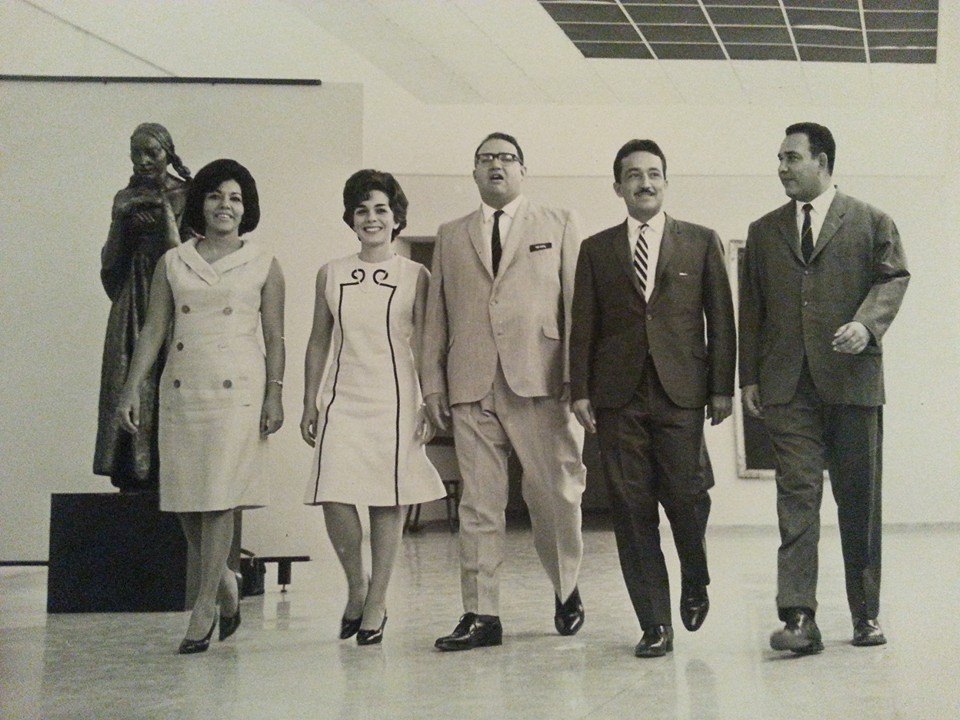
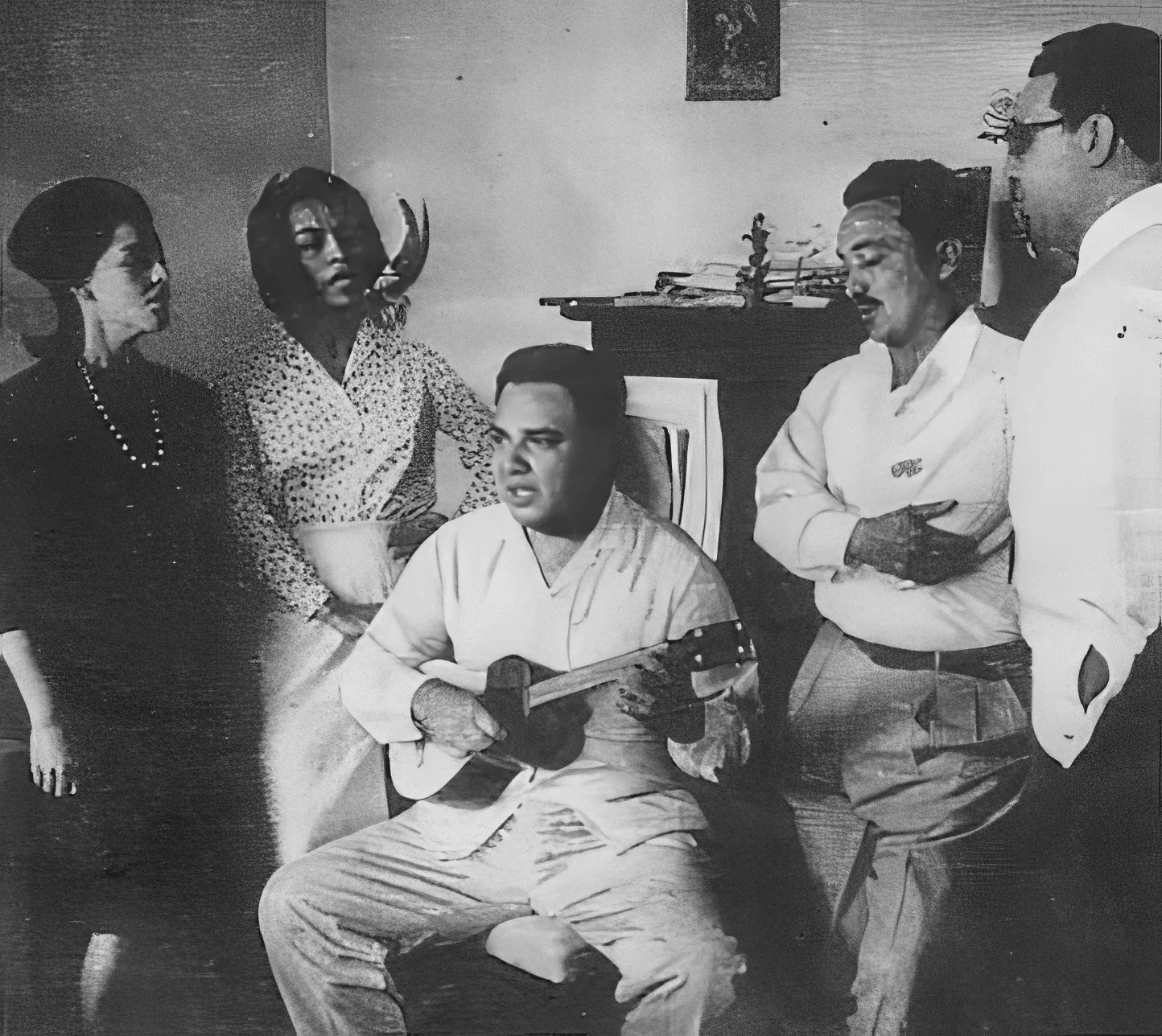
The gaita margariteña “La Concha” was incorporated into the Quinteto Contrapunto’s repertoire in their Volume 1, published in December 1963.
A few months later, in the first quarter of 1964, journalist Alí Brett Martínez published in Momento magazine the article “Un milagro llamado Contrapunto” (A Miracle Called Contrapunto), which included fragments of the lyrics performed by the quintet. There, the word “Yoco” is expressly cited, along with a footnote that reads:
“It was collected by the quintet’s director, Rafael Suárez, and he assures us that it is one of the most well-known gaitas—also called décima—on Margarita Island.”
Maestro Rafael Suárez, director and arranger of the Quinteto Contrapunto, was born in El Poblado (Caserío Fajardo), in Nueva Esparta State, one of the historic areas inhabited by the Guaiqueríes.
This village was known for its seafaring tradition and its constant contact with the Sucre coast, especially with the Araya peninsula and the coastal communities of the Gulf of Cariaco.
Among those communities is precisely Yoco, in the current Punta de Piedra parish, Valdez municipality of Sucre state, less than 25 km from Margarita Island.
This makes Maestro Rafael Suárez a first-order witness regarding the traditions and folklore of his homeland.
In May 1964, the Quinteto Contrapunto released their second album, and subsequently the Polydor label released a double album that brought together the first two volumes.
In the insert of this album—which included the complete lyrics—it again appears:
“me voy pa’ Yoco de madrugada; de madrugada me voy pa’ Yoco…”
This constitutes a second direct source from the group itself, confirming the mention of Yoco in the lyrics.
3. Other Documentary and Oral References
Margaritan composer and collector Modesta Bor recorded another popular gaita whose chorus goes:
“Préstame el pito de tu tambora para prestárselo a mi señora, de madrugada me voy pa’l Yoco porque la plaga me tiene loco.”
This version, also from the eastern heritage and linked to the Guaiquerí cultural sphere, reinforces the historical existence of the place name Yoco.
Similarly, performers such as the Dueto Criollísimo—contemporaries of the Quinteto Contrapunto—and later artists like Ilan Chester preserve the form “Yoco” in their versions of La Concha.
4. The Origin of the Confusion: “Yopo”
The variant “Yopo” appears to have been introduced with the 1999 publication of Rafael Suárez’s arrangements edited by the Vicente Emilio Sojo Foundation (CONAC).
From that edition on, scores and choral versions began circulating that substitute “Yoco” with “Yopo”. Before that year, only one foreign recording with that form is known, suggesting it was a typographical or transcription error.
5. What is Yopo (and Why It Doesn’t Fit)
Yopo (also known as cohoba, niop, yupa, or yopa) is the common name for the South American plant Anadenanthera peregrina, whose seeds contain psychoactive alkaloids.
When inhaled, they produce hallucinogenic effects and are used in ceremonial rituals by ethnic groups from the Orinoco basin, northern Amazon, and Venezuelan plains—such as the Piaroa, Yanomami, and Tamanaco—but not by the Guaiqueríes.
Therefore, both by cultural and geographical context, it is unlikely that the gaita margariteña La Concha refers to the hallucinogen Yopo.
Instead, the existence of the town of Yoco, within the historical Guaiquerí territory, confirms that this is the correct form in the original lyrics.
Conclusion
The documentary, musicological, and ethnographic evidence converges in the same direction:
The correct word in the gaita margariteña La Concha is “Yoco”, not “Yopo”.
The confusion, probably arising from an editorial error in the transcription of the scores published in 1999, has given rise to subsequent interpretations foreign to the cultural context of eastern Venezuela.
Thus, “Yoco” is not just a name in a song: it is a living vestige of the Guaiquerí territory and of Margarita’s musical memory.
As in all research, there will be those with divergent opinions, which are entirely valid and respectable when they are based on documentary facts.